Liturgical Calendar Wheel Laser Cut CNC: Bridging Tradition and Modern Craft
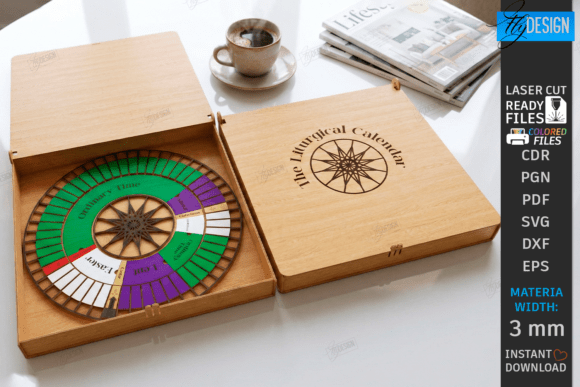
In an era dominated by digital notifications and fleeting online content, there is a growing desire for tangible, enduring objects that anchor us in time and tradition. The Liturgical Calendar Wheel Laser Cut CNC represents a perfect convergence of ancient spiritual rhythms and contemporary manufacturing technology. This intricate design allows creators, educators, and families to visualize the Christian Church seasons—Advent, Christmas, Lent, Easter, and Ordinary Time—through a functional, rotating wooden artifact. It is not merely a decorative piece; it is a tool for religious education and a focal point for Catholic home altars that speaks to a modern appreciation for craftsmanship.
The resurgence of interest in perpetual calendars stems from a shift in how people engage with their faith and their hobbies. As professionals and hobbyists alike seek meaningful projects that offer both utility and aesthetic value, the demand for high-quality digital files compatible with laser cutters has surged. This specific design, featuring a box and a rotating wheel, transforms a simple sheet of 3mm plywood into a sophisticated instrument for tracking the liturgical year. By understanding the mechanics and the cultural context of this project, creators can produce items that resonate deeply with users seeking to integrate faith into daily life.
The Intersection of Faith and Fabrication
The concept of the Liturgical Year is central to Catholic practice, marking the progression of Christ's life through distinct seasons. Traditionally, these seasons were marked by changes in vestments, readings, and altar decorations. However, the Liturgical Calendar Wheel Laser Cut Perpetual Catholic Calendar SVG brings this abstract timeline into physical reality. Unlike paper calendars that are discarded after a year, a perpetual calendar crafted from wood serves as a lasting heirloom. It embodies the cyclical nature of the faith, reminding users that while dates change, the spiritual journey remains constant.
For Sunday School teachers and religious educators, this object serves as a powerful visual aid. Explaining the transition from the penitential season of Lent to the joyous celebration of Easter becomes more intuitive when students can physically rotate the wheel. The tactile experience reinforces learning, catering to kinesthetic learners who benefit from manipulating objects rather than just listening to lectures. In a classroom setting, this tool bridges the gap between theoretical instruction and practical application, making complex theological concepts accessible to children and adults alike.
Furthermore, the integration of CNC (Computer Numerical Control) and laser cutting technologies has democratized access to such detailed designs. What once required specialized woodworking skills and months of labor can now be achieved with precision using a digital file. This accessibility has empowered small business owners, freelancers, and hobbyists to create professional-grade religious decor. The ability to customize materials, sizes, and finishes allows creators to tailor the product to specific market needs, whether for a grand cathedral or a modest home chapel.
Technical Precision and Design Compatibility
The success of any laser-cut project hinges on the quality of the source file and the compatibility of the software with the hardware. The Liturgical Year Wheel with Box design relies on a clear distinction between cutting paths and engraving areas to ensure a flawless final product. In this specific digital package, the instructions are straightforward yet critical: RED line – CUT and BLACK line – ENGRAVE. Adhering to this color-coding system ensures that the machine separates the structural components from the decorative text and patterns without error.
Creatives working with this Liturgical Calendar Wheel Laser Cut CNC file must ensure their cutting machine and software are fully compatible with the provided formats. The digital product includes a comprehensive zip archive containing multiple file types to accommodate various workflows:
- SVG file: Ideal for vector-based design software like Adobe Illustrator or CorelDraw, offering scalability without loss of resolution.
- EPS file: A standard format for professional printing and vector editing, ensuring broad compatibility across different operating systems.
- DXF file: Essential for CAD software and many industrial laser cutter interfaces, providing precise geometric data.
- PNG file: Useful for previewing the design or for use in marketing materials where a raster image is required.
- PDF file: Often includes documentation, assembly instructions, and a scalable view of the layout for planning material usage.
This variety in file formats addresses a common pain point in the maker community: software incompatibility. By providing options ranging from SVG to DXF, the creator ensures that whether a user operates a desktop diode laser, a CO2 tube laser, or a CNC router, they can find a format that works seamlessly. For those requiring alternative file types or specific adjustments to the PNG dimensions, open communication channels allow for customization, ensuring every project meets the unique specifications of the user's equipment.
Material Selection and Workflow Optimization
While the design is versatile, the recommended material for this project is 3mm plywood. This thickness strikes a balance between structural integrity and ease of cutting. Thicker woods may require multiple passes or higher power settings, increasing the risk of burning or charring, while thinner materials might lack the durability needed for a frequently handled educational tool. Plywood offers a warm, natural aesthetic that complements the traditional feel of religious decor, and its layered structure holds up well under the heat of a laser beam.
Workflow efficiency is another key consideration for entrepreneurs and makers. The inclusion of a box component in the design adds significant value. Instead of shipping loose parts that could easily get lost or damaged, the box provides a protective casing for the wheel. This feature enhances the product's appeal as a gift, particularly for Sunday School teachers or new parents looking to establish a Catholic home altar. The box also serves as a storage solution, keeping the wheel clean and ready for use throughout the year.
Modern workflows often involve batch production. With a reliable digital file, creators can set up their machines to cut multiple wheels simultaneously, optimizing material usage and reducing waste. This scalability is crucial for small businesses aiming to meet seasonal demand, such as the rush before Advent or the start of the school year. The precision of the laser cut ensures that every piece fits together perfectly, minimizing the need for post-production sanding or adjustment.
Trends in Religious Education and Home Decor
The market for religious education tools and home decor is evolving. There is a noticeable shift away from mass-produced, plastic items toward handcrafted, sustainable goods made from natural materials. Consumers are increasingly willing to invest in products that tell a story and reflect their values. The Liturgical Calendar Wheel Laser Cut Perpetual Catholic Calendar SVG taps directly into this trend. It appeals to the "maker" ethos while serving a deeply personal function.
In the realm of home decor, the Catholic home altar has seen a revival. Families are creating dedicated spaces for prayer and reflection, moving beyond simple crosses to include more interactive elements. A perpetual calendar wheel fits naturally into this environment, serving as a conversation starter and a daily reminder of the church's rhythm. Its presence encourages family members to pause and consider the current season of the liturgical year, fostering a deeper connection to their faith practices.
For educators, the trend extends to the classroom. Teachers are looking for resources that are engaging and multi-sensory. A wooden calendar wheel offers a break from screens and textbooks, providing a hands-on way to explore theology. It aligns with pedagogical approaches that emphasize active learning and student engagement. Moreover, as a gift for Sunday School teachers, it acknowledges their hard work and provides them with a tool that will serve them and their students for years to come.
Practical Implications for Creators and Businesses
For business owners and freelancers in the crafting sector, offering high-quality digital files is a viable revenue stream. The demand for niche designs like the Christian Church Seasons Decor Laser File indicates a specific market segment that is underserved by generic templates. By focusing on quality, clarity, and customer support, creators can build a loyal following. The invitation to contact the seller for custom file types or questions demonstrates a commitment to customer satisfaction, which is essential for building trust in the digital marketplace.
Additionally, the versatility of the design allows for creative experimentation. While 3mm plywood is recommended, creators can experiment with different wood species, veneers, or even acrylics to create variations that appeal to different tastes. The ability to modify the engraving text or add personalized touches makes each piece unique. This flexibility is a significant advantage in a competitive market, allowing sellers to differentiate their offerings and command higher prices for customized solutions.
As we look forward, the intersection of faith, education, and technology will continue to grow. Tools like the Liturgical Calendar Wheel Laser Cut CNC will play an increasingly important role in helping individuals and communities navigate their spiritual lives in a modern world. They represent a bridge between the past and the future, honoring tradition while embracing innovation. Whether used in a bustling parish hall, a quiet home study, or a vibrant classroom, these wheels serve as a testament to the enduring power of craft and faith.
For those interested in exploring this further, staying connected with creators who specialize in these designs ensures access to future releases and updates. Following shops that prioritize quality and community engagement allows buyers to stay ahead of trends and discover new ways to enhance their spiritual and creative lives. The journey from a digital file to a finished, functional piece of art is a rewarding one, offering both practical utility and deep symbolic meaning.