Cute Fruit Coloring Pages for Kids: A Practical Guide for Parents and Educators
In the landscape of early childhood education, selecting the right resources can significantly impact a child's engagement and developmental progress. Cute Fruit Coloring Pages for Kids represents a specific category of learning materials designed to bridge the gap between entertainment and foundational skill building. Unlike generic coloring sheets that may feature complex scenes or abstract concepts, this approach focuses on recognizable, high-interest subjects—specifically fruits—to capture the attention of toddlers and preschoolers. For parents, teachers, and homeschooling coordinators aged 20 to 50 who are evaluating educational tools, understanding the nuances of these pages is essential for making an informed decision.
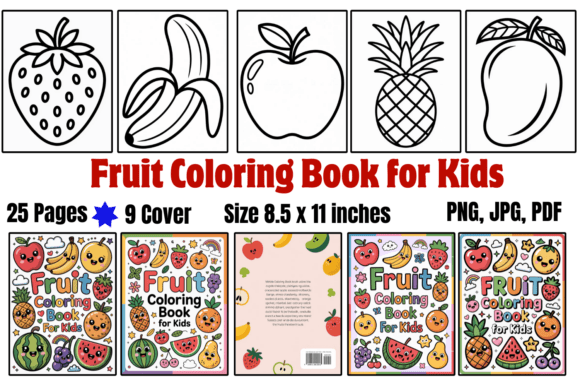
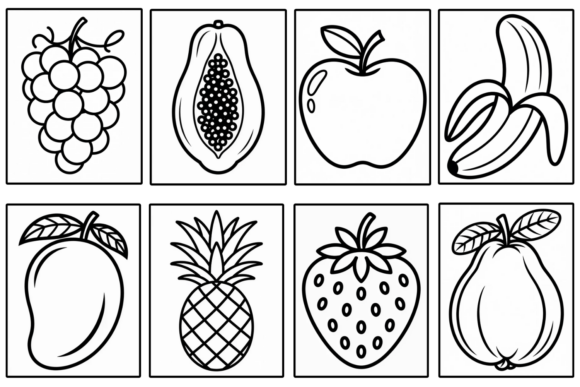
The core value of Cute Fruit Coloring Pages for Kids lies in its deliberate simplicity. The illustrations are characterized by bold outlines and uncluttered designs, which are critical for children aged 2 to 6 who are still developing fine motor skills. When a child attempts to color within lines, they require visual clarity; overly detailed images can lead to frustration rather than accomplishment. By focusing on distinct shapes like apples, bananas, strawberries, and pineapples, these pages provide a manageable challenge that fosters confidence. This distinct focus sets them apart from broader activity books that might mix animals, vehicles, and fantasy characters, potentially overwhelming a young learner who benefits from thematic consistency.
Educational Benefits and Developmental Focus
When comparing Cute Fruit Coloring Pages for Kids to other early learning resources, the primary differentiator is the dual focus on cognitive recognition and motor skill refinement. The act of coloring is often dismissed as merely a pastime, but in the context of early education, it serves as a functional exercise. The process requires hand-eye coordination, grip strength, and spatial awareness. Because fruit shapes are generally organic yet defined, they offer a natural progression for pencil control.
Beyond motor skills, these pages serve as an effective tool for vocabulary acquisition and categorization. Introducing a child to a variety of fruits—such as mangoes, watermelons, grapes, and oranges—through visual repetition helps cement these concepts in their memory. In a classroom or home setting, educators can use these pages as a springboard for discussions about nutrition, colors, and textures. For instance, while coloring a strawberry, a parent might discuss its red hue, its seeds, or how it grows. This contextual learning is more effective when the visual aid is clear and appealing, which is exactly what the bold outlines in these coloring pages provide.
Comparison with Alternative Learning Formats
Parents and educators often weigh Cute Fruit Coloring Pages for Kids against digital alternatives and traditional workbooks. Each format has its place, but the tradeoffs are significant. Digital coloring apps have surged in popularity due to their convenience and lack of mess. However, screen time remains a concern for many adults managing early childhood development. Physical coloring pages offer a tactile experience that screens cannot replicate. The resistance of paper against a crayon or marker provides sensory feedback that is crucial for proprioception—the body's ability to sense movement and position.
Furthermore, when compared to standard workbooks that include writing exercises or math problems, Cute Fruit Coloring Pages for Kids offers a lower-stress entry point into structured activities. Young children, particularly those in the toddler age range, may not yet be ready for the pressure of completing worksheets. Coloring acts as a "soft start," allowing them to engage with a book format without the anxiety of getting answers wrong. It is also distinct from open-ended art supplies alone. While providing a child with blank paper and markers encourages creativity, it does not necessarily teach shape recognition or focus. These coloring pages strike a balance by offering a guided structure within a creative framework.
Digital vs. Print: Format Considerations
A key decision factor for modern families is the file format. Many resources, including this collection, are available as high-quality print-ready files in JPG, PNG, and PDF formats. This flexibility allows users to choose between immediate digital use on tablets or physical printing. The advantage of having digital files is sustainability and cost-effectiveness; parents can print only the pages they need, reducing waste compared to buying a pre-printed book where unused pages go to trash. Additionally, digital files allow for customization. A teacher might project a page onto a whiteboard for a group activity, while a parent might print multiple copies for a sibling rivalry-free session.
However, the print quality matters. If the digital resolution is low, the bold outlines may appear jagged, defeating the purpose of the design. High-resolution files ensure that the lines remain crisp even when printed on standard home printers, maintaining the integrity of the "easy-to-color" promise. This technical aspect is a vital consideration when evaluating downloadable resources versus purchasing a physical book.
Best-Fit Scenarios and Limitations
Cute Fruit Coloring Pages for Kids are ideally suited for specific environments and developmental stages. They are particularly effective for:
- Homeschooling Routines: As part of a morning circle or independent quiet time, these pages provide a structured yet relaxed activity that aligns with nature-based curricula.
- Kindergarten Transitions: For children moving from preschool to kindergarten, these pages help build the stamina required for longer seated tasks without introducing academic pressure.
- Special Needs Education: The clear, high-contrast designs are beneficial for children with visual processing challenges or those who benefit from reduced visual clutter.
- Rainy Day Activities: For parents seeking screen-free entertainment that keeps children engaged for extended periods.
Conversely, there are situations where these pages may not be the optimal choice. Children who have already mastered basic coloring skills and seek more complex artistic challenges may find simple fruit outlines too repetitive. Similarly, if the goal is purely imaginative drawing without constraints, these guided pages might feel limiting. In such cases, transitioning to blank canvas activities or more advanced illustration books would be more appropriate. Additionally, for older children (ages 7+), the subject matter and difficulty level are likely to be too juvenile, necessitating a shift toward more sophisticated themes.
Evaluating Quality and Content Variety
When assessing a resource like Cute Fruit Coloring Pages for Kids, content variety is a critical metric. A robust collection should offer enough diversity to maintain interest over time. A set containing 25 unique pages covers a wide spectrum of common fruits, ensuring that children encounter different shapes and sizes. Including items like pineapples and watermelons introduces geometric patterns and texture opportunities that differ from the smooth curves of a banana or apple. This variety prevents boredom and encourages repeated engagement.
Another factor in evaluation is the inclusion of cover designs. Resources that provide beautiful cover options allow users to create a personalized booklet. This transforms a loose stack of papers into a tangible "book" that a child can take pride in owning. This psychological aspect—creating a finished product—is often overlooked in generic downloads but adds significant value for parents looking to foster a sense of ownership and achievement in their children.
Making the Decision: Is It Right for You?
Ultimately, the decision to incorporate Cute Fruit Coloring Pages for Kids into your educational toolkit depends on your specific goals and the needs of the child. If you are looking for a resource that prioritizes fine motor development, reduces screen time, and introduces basic vocabulary through engaging visuals, this option presents a strong case. Its focus on simplicity and bold outlines makes it accessible for the youngest learners, while the thematic consistency supports focused learning.
However, if your priority is advanced artistic instruction or if you are working with older children who require complex problem-solving tasks, you may need to look beyond this specific style. It is most effective when used as part of a balanced curriculum that includes reading, play, and physical activity. By understanding the strengths and limitations of these coloring pages, adults can make a strategic choice that enhances both the fun and the educational value of their daily interactions with young learners. The goal is not just to keep a child busy, but to provide a meaningful experience that lays the groundwork for future learning success.